

LUMO 3D School for Kids: First Sale on Day Three and €2,500 a Month
Katya Sycheva, an art philosopher from the Kaliningrad Museum of Fine Arts, built the online 3D school for kids LUMO after emigrating: a year at someone else's school and her own product, launched in June 2024 — 55 leads at $1.7 each and the first sale of $960 on day three, that student is still with her today. Two years at €2,500 a month, four sales waves, her own LMS, entry into the US market with 6 of 8 meetings converting.

What the client came with
Katya Sycheva is a 3D artist, teacher and philosopher. She has done 3D modeling since age 13 and has taught since 22. She holds a master's degree in philosophy, studied as a graduate student at Pushkin Leningrad State University and was writing a dissertation; in 2022 she gave public lectures at the Kaliningrad Regional Research Library — "The Art of Memory and the Age of Posthumanism," "Something and Nothing: The Experience of Emptiness as a Cultural Phenomenon." She taught at Immanuel Kant Baltic Federal University, running seminars in a critical thinking course. For five years she created creative projects for children at the Kaliningrad Regional Museum of Fine Arts, headed its science education department for three years, coordinated four contemporary art exhibitions, and at the museum's "Night of the Arts" was presented as an art philosopher with the lecture "The Universal Human."
Emigrating from Russia wiped all of it out at once. The museum, the university, graduate school, the lectures, the dissertation — none of it works abroad. There was nothing to live on, she had to start from zero, and the first step was finances — her own business.
The decision was to build a school around a childhood passion and her own expertise: 3D for kids. One important detail: before launching, Katya spent a year working as a teacher at someone else's online 3D school while building her own product in parallel — a curriculum, projects tailored to a child's interests, and a method for the first lesson, in which the student makes and animates their own character. By launch time the product was already strong and tested on real students. That is exactly why the start was so fast: the ads switched on something finished, rather than testing an idea. Her main strength, per our intake audit, was "the ability to get kids excited and hooked on 3D."
What we did
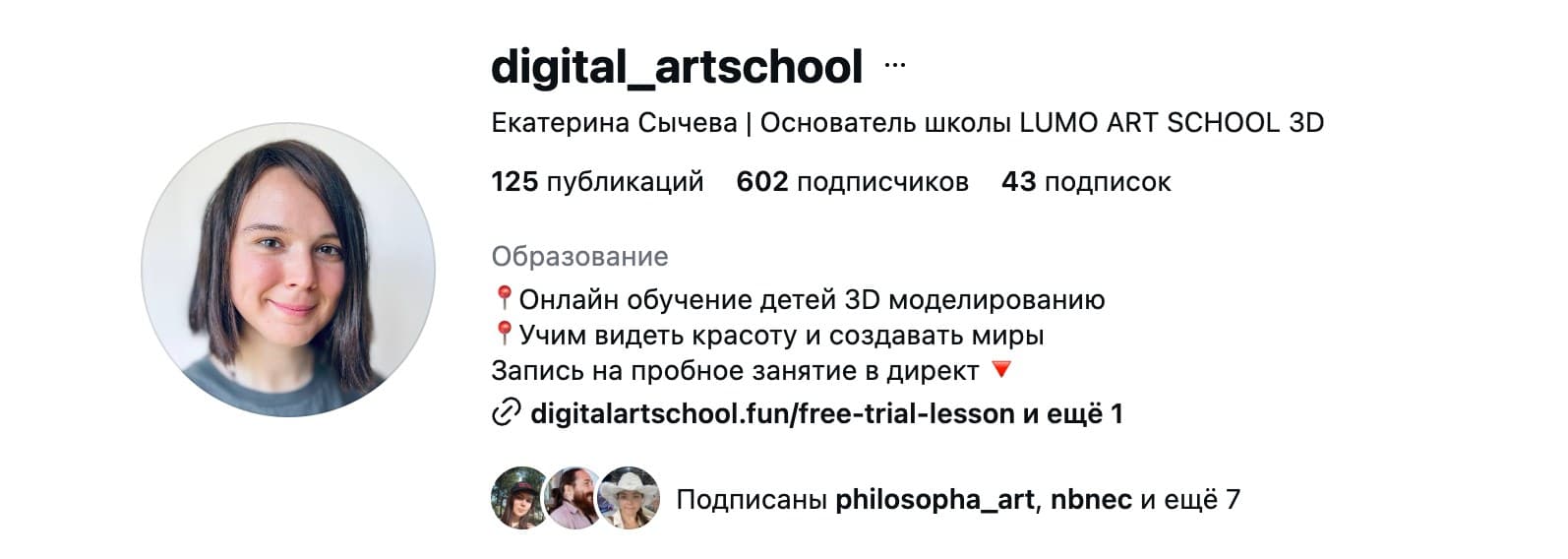
We started from absolute zero in May 2024: built the school's Instagram and put together a funnel leading to a meeting. The account stayed small — 602 followers and 125 posts today — but the school never needed more than that: sales don't come from the feed, they come from ads and meetings.
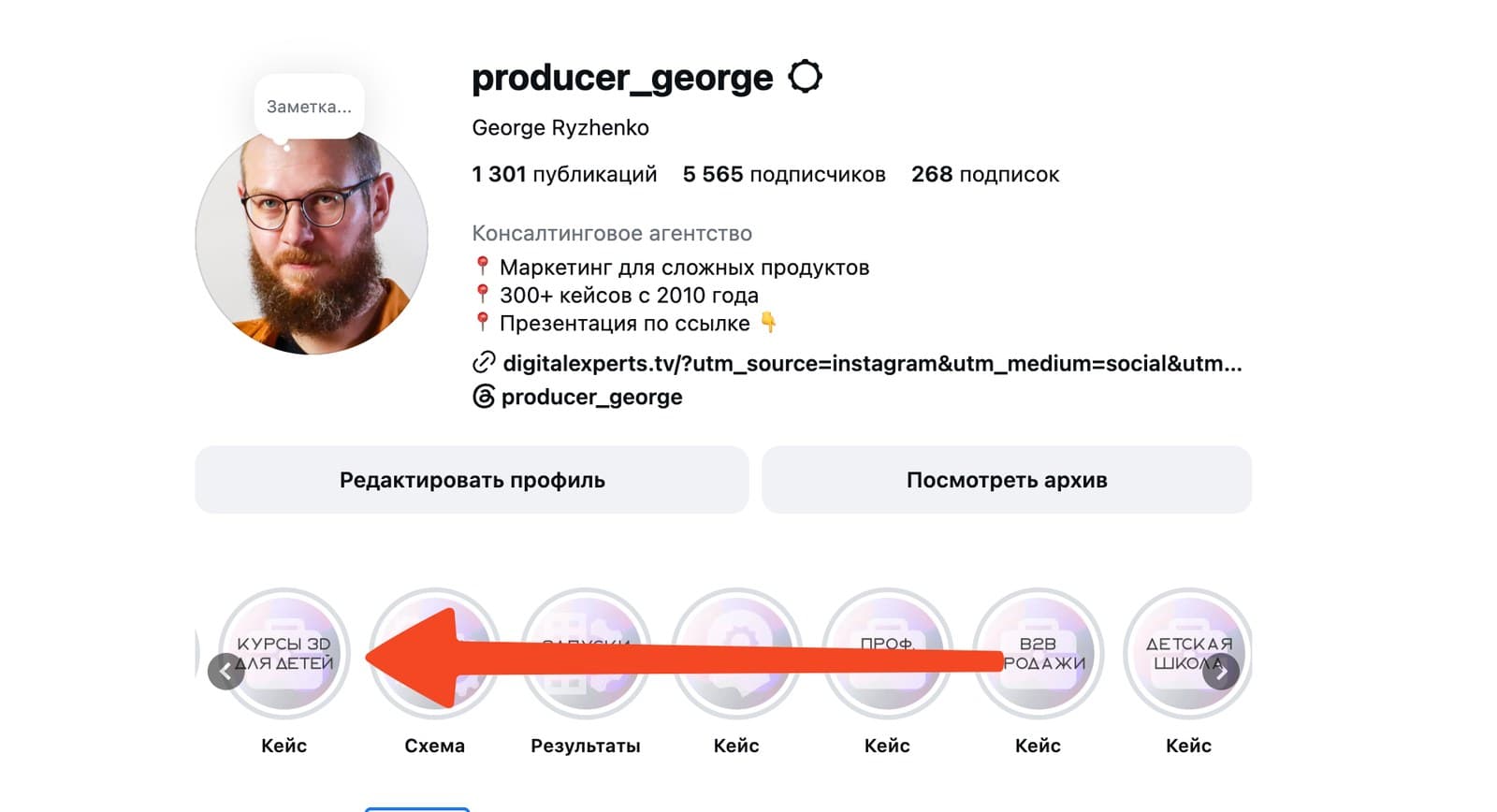
On June 6, 2024 we launched ads across several countries at once — as a reality format, "Launch an Online School in a Week," that George ran day by day on his own Instagram. The whole launch is still there today, pinned in a story called "3D Course for Kids"; the screenshots below are from it.
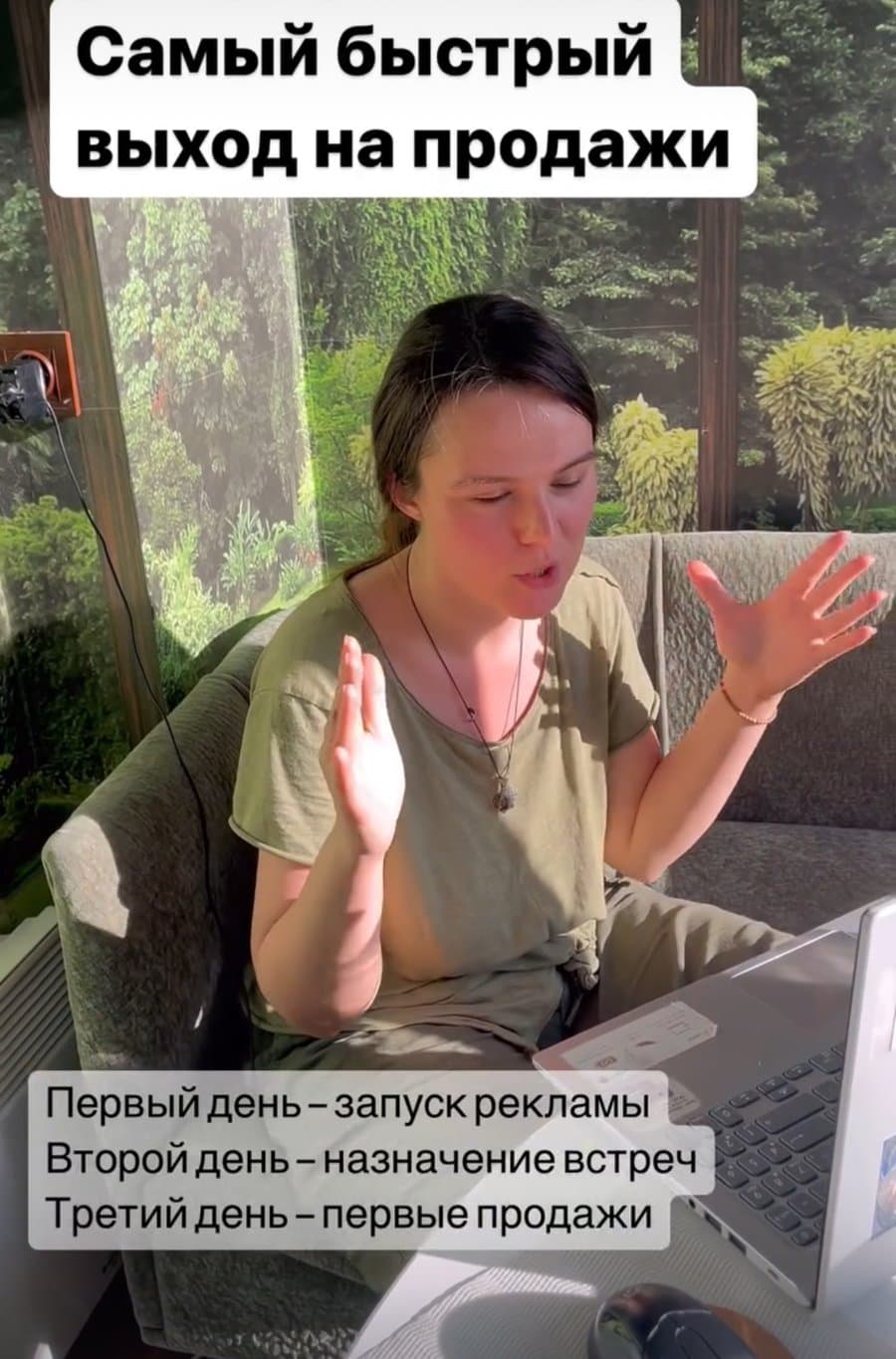
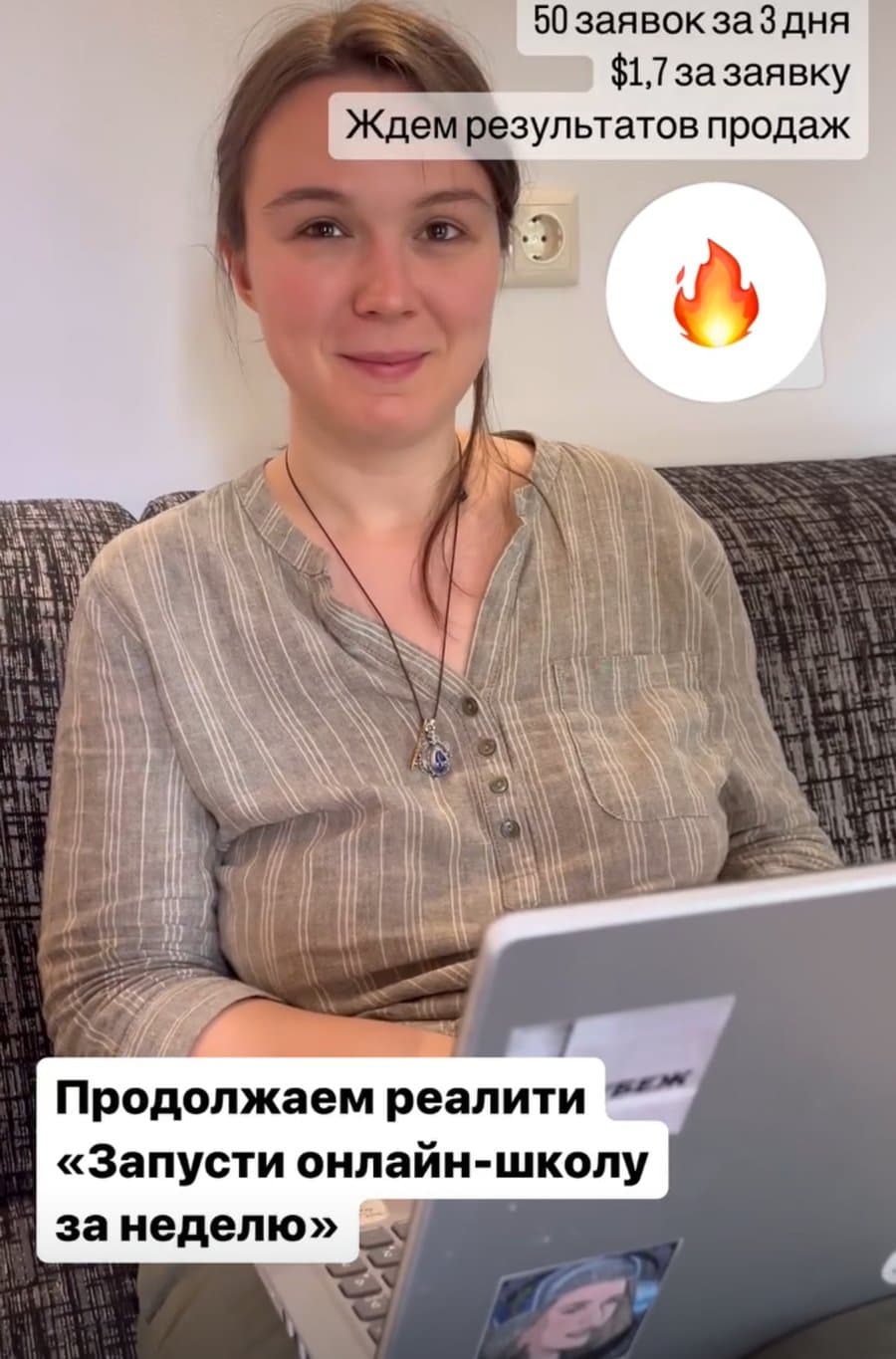
The first evening — 29 leads at $1.6 each. Three days in — 50 leads at $1.7 each, with the ad account showing 55 started conversations total at a cost from $0.36. The plan was simple: day one — ads, day two — booking meetings, day three — first sales.
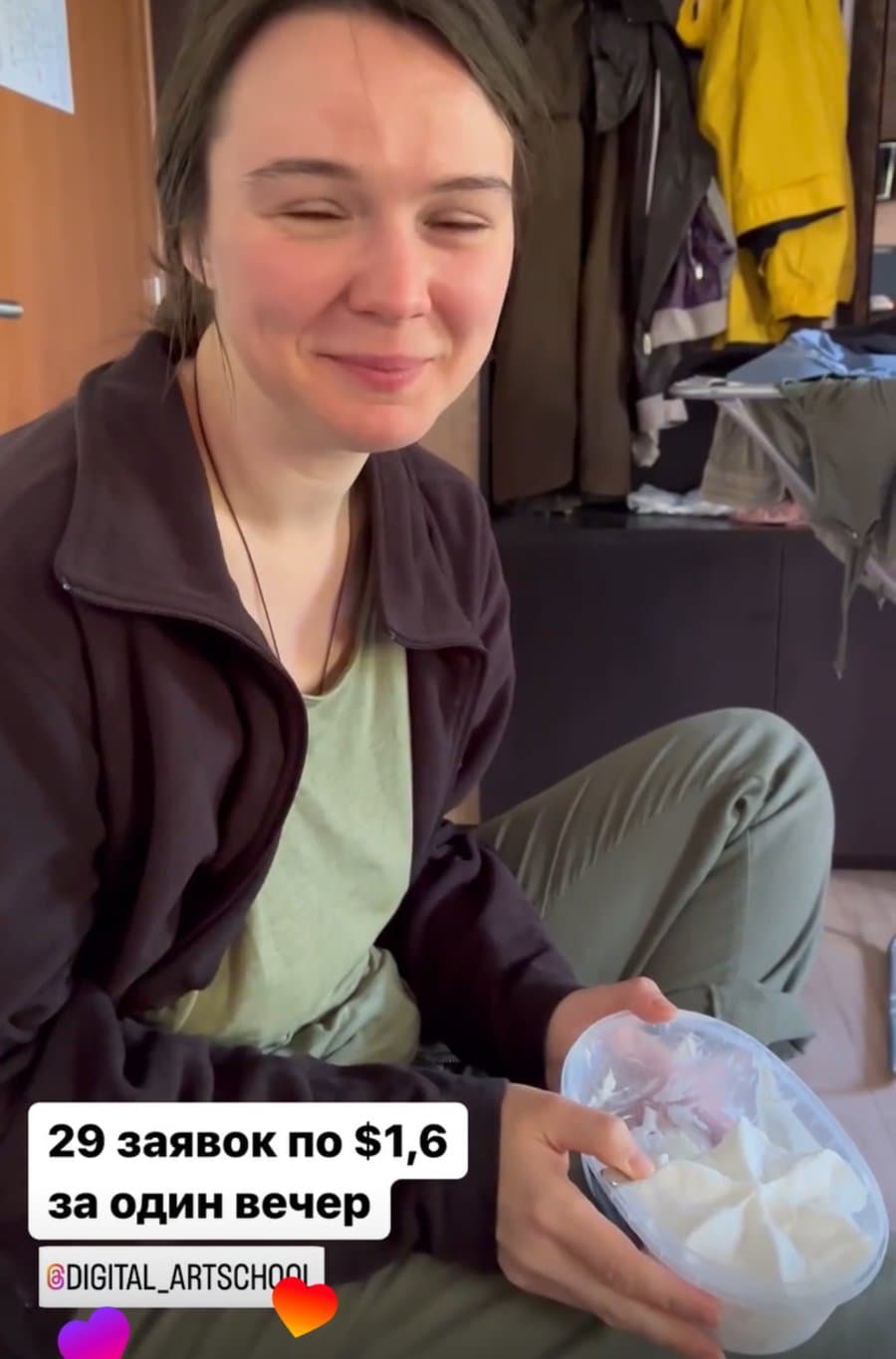
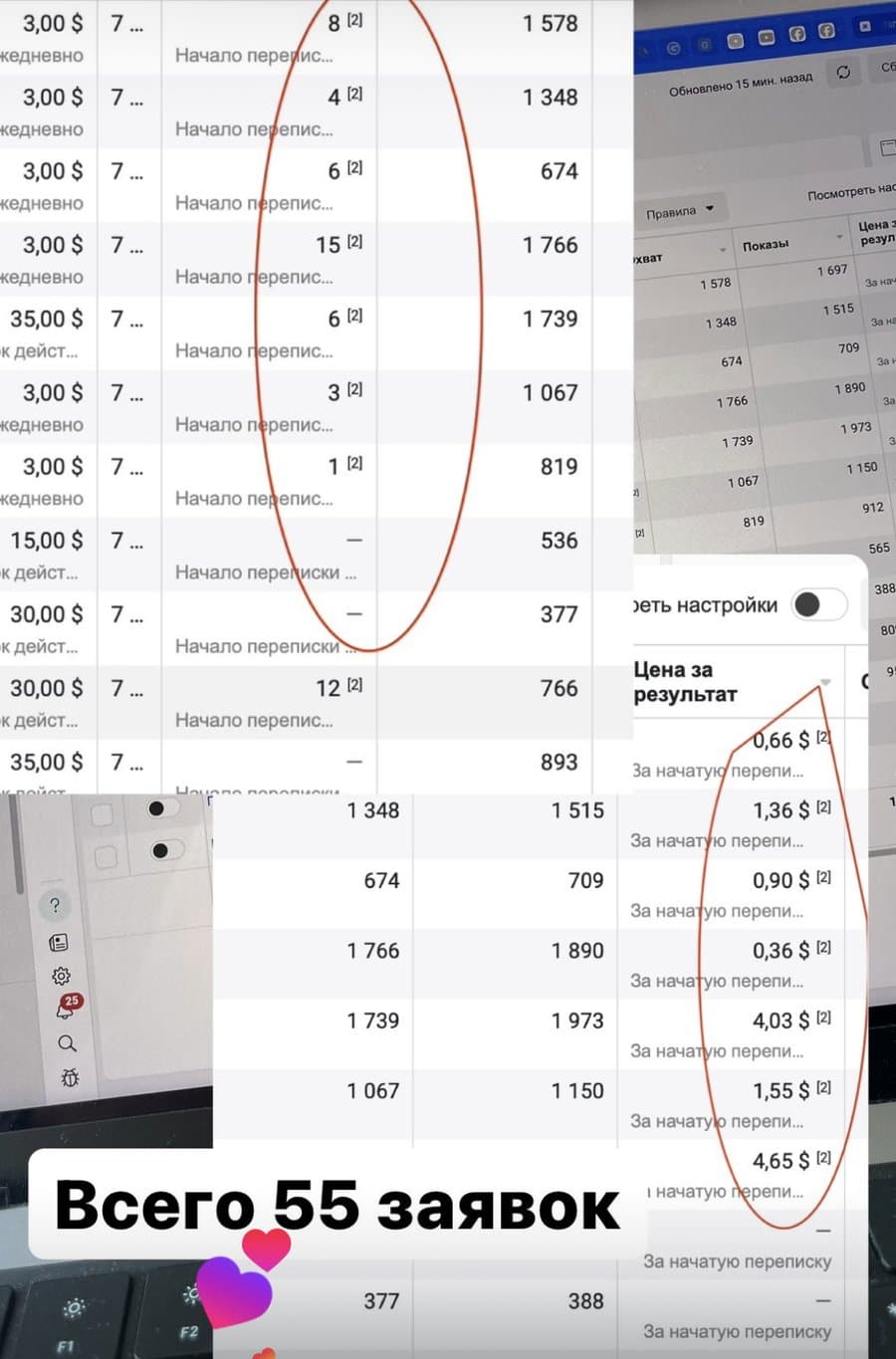
June 6, 2024: 29 leads at $1.6 each on the first evening of ads
Geography answered differently than expected. A lead from Israel cost $3.5, from Bishkek — $0.30, and parents from Bishkek were more motivated. Western Europe produced not a single lead, Eastern Europe only a handful. The takeaway went straight into the story at the time: the CIS is an undervalued market, "experts turn their noses up at it, and for no good reason."
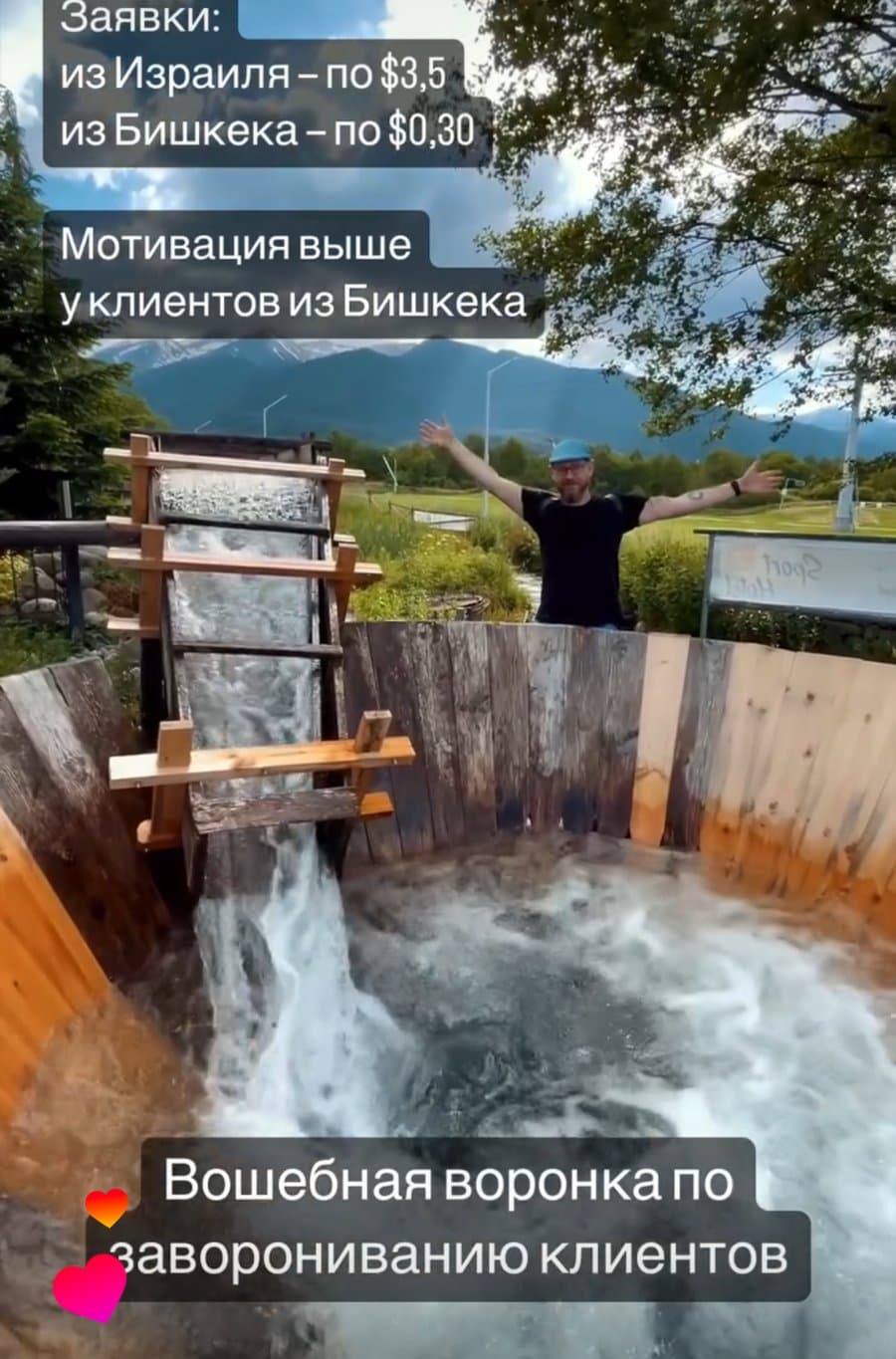

Leads from Israel — $3.5, from Bishkek — $0.30. Motivation is higher among Bishkek leads
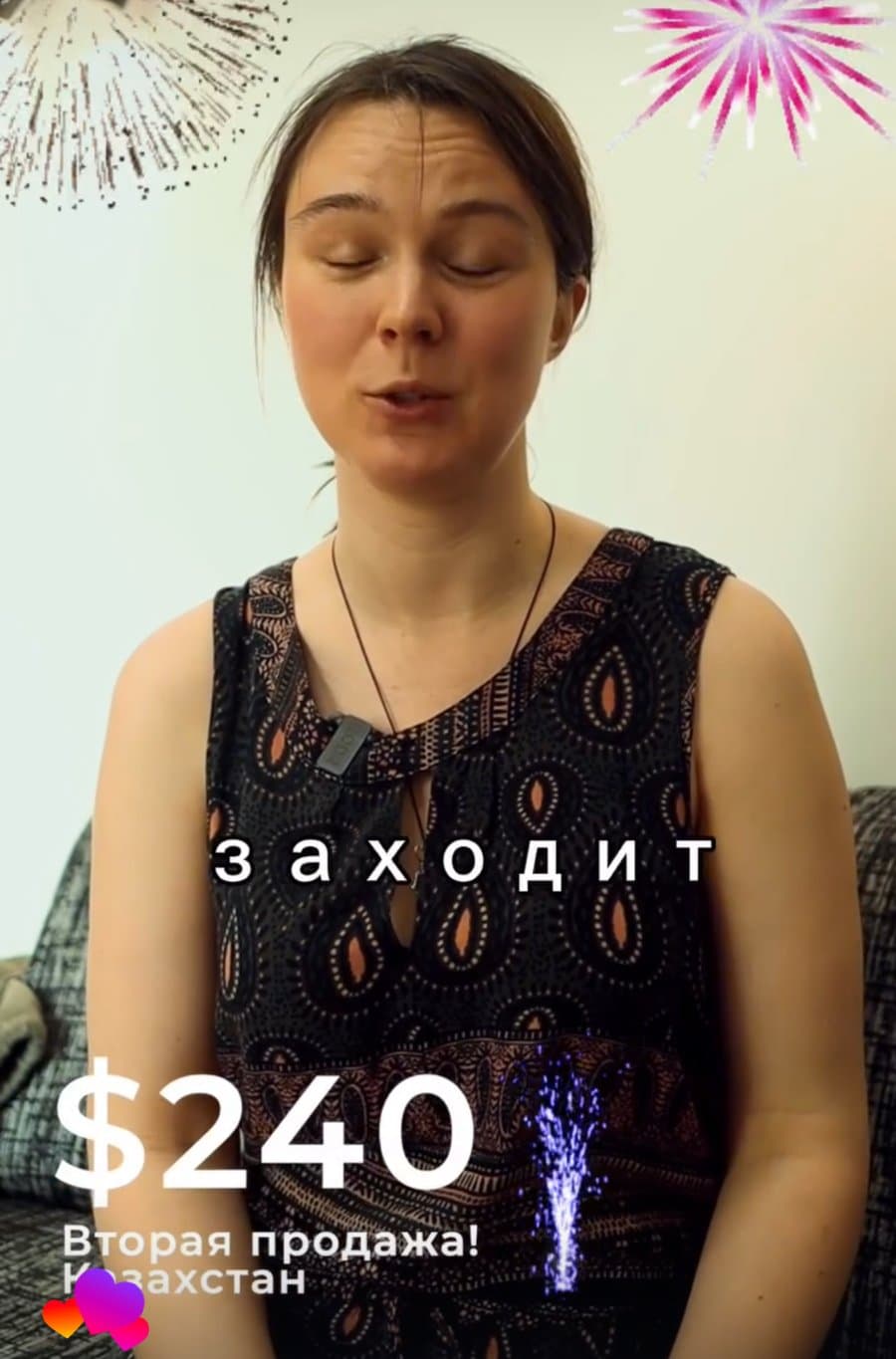
The school's DMs never emptied out: "the leads just keep coming." Katya sold herself — in three meetings, with no sales department — and by the first week was already spending seven hours a day with clients. On June 9, the third day of ads, came the first sale: a full 40-lesson course from a student in Kazakhstan. The family paid for the whole course upfront, so they got a discount — $960 instead of the list price of $1,200. That first student is still with the school today and has bought new courses since. On June 10 came the second sale — $240 for a month of classes, also Kazakhstan. By then, $87 had gone into testing. MVP confirmed.

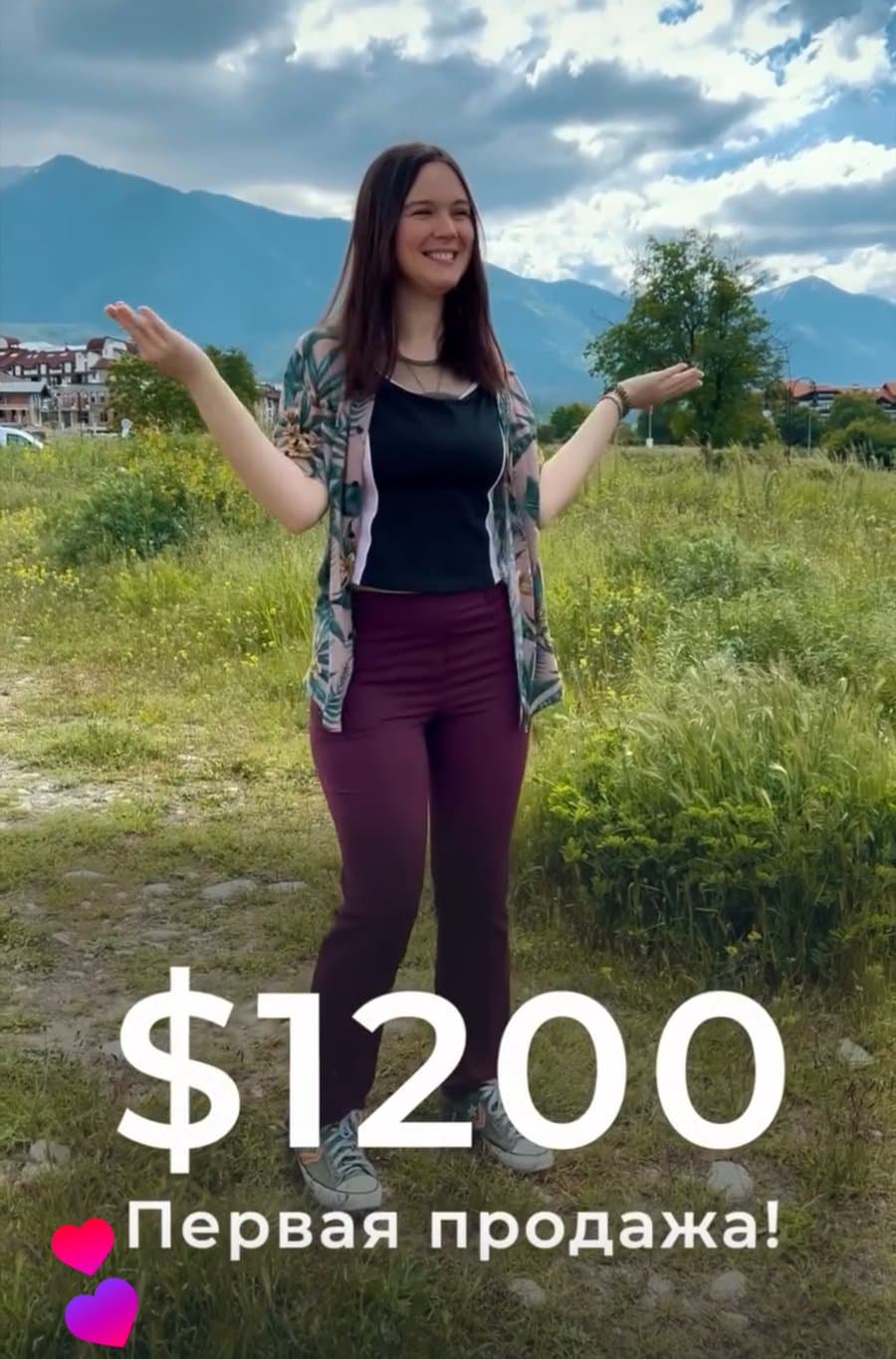
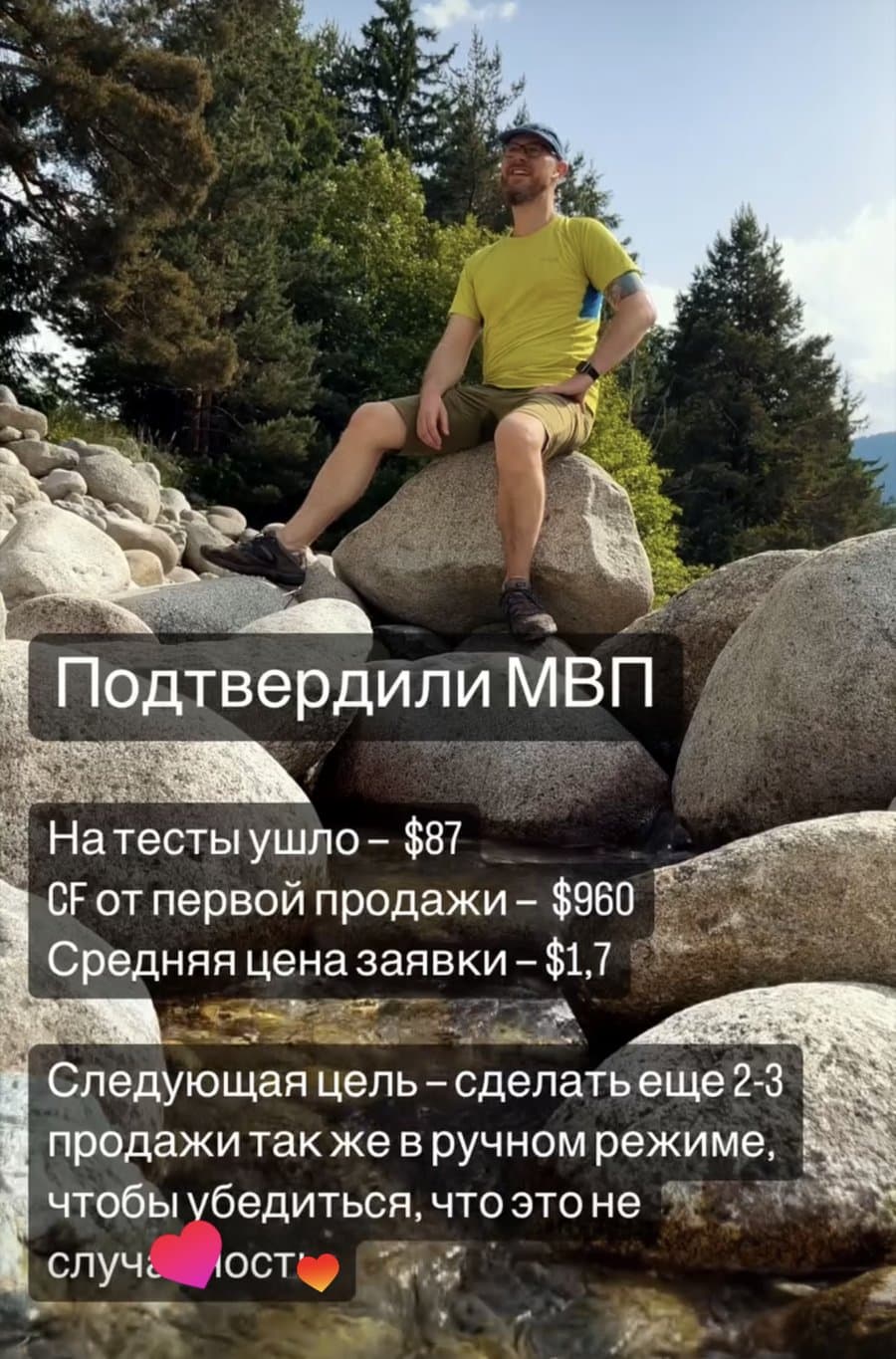

School's DMs, June 8: “the leads just keep coming,” Katya decided to sell in three meetings
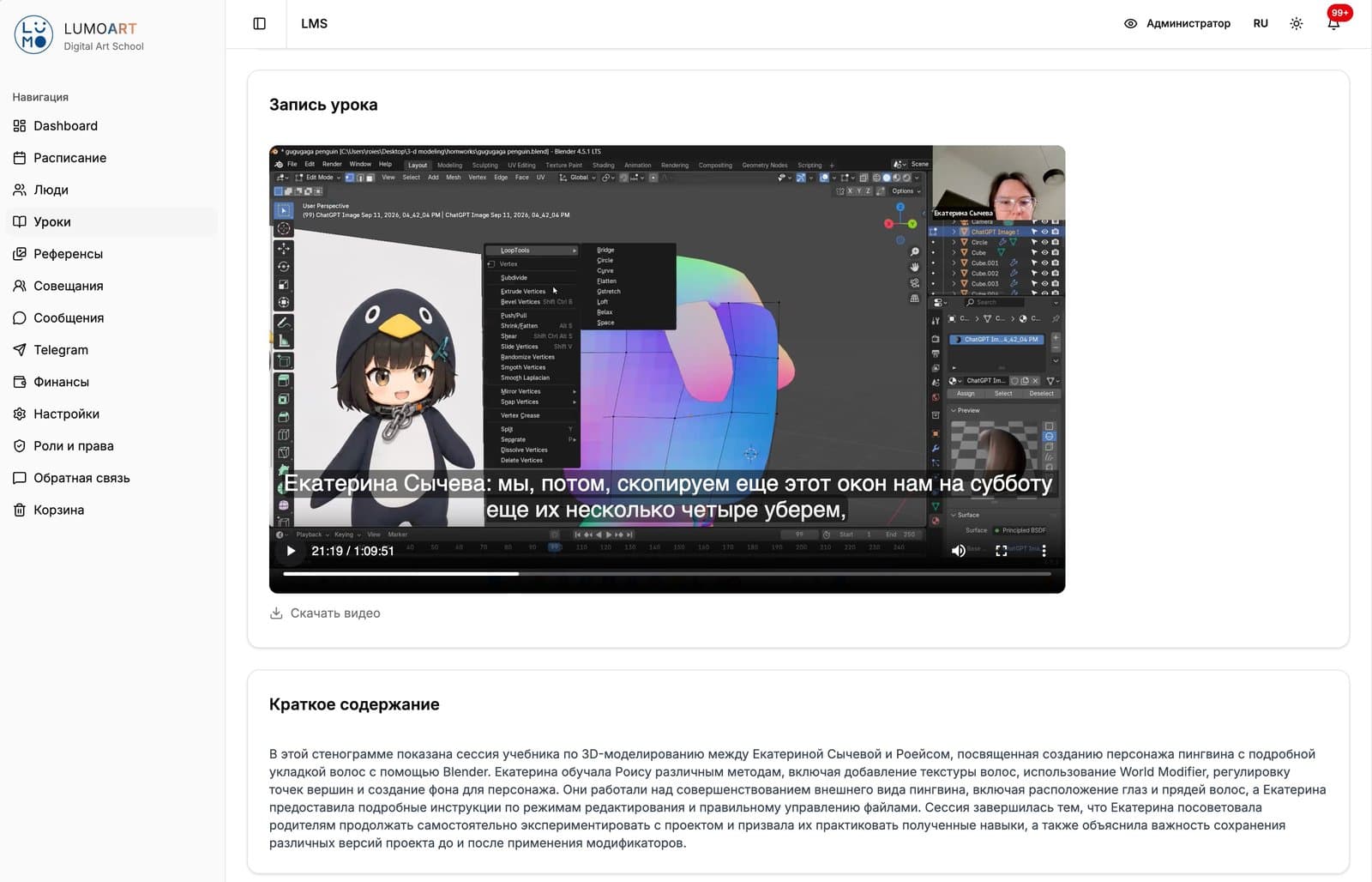
Next came the infrastructure for what was already selling. We built a site in Russian, English and Hebrew with a blog that grew to 45 articles. And once there were enough students, we built a proprietary LMS from scratch, built by our own development team. The whole school lives inside it: scheduling, lessons, packages and payments, teacher roles, Telegram notifications, lesson recordings — and an automatic summary of every lesson that the LMS writes on its own. It runs on a lot of automation, and that's exactly what lets the school run with just two people.
What came out of it
Sales came together in three days: 55 leads at $1.7 each on $87 of testing, the first sale for $960, the second for $240 the next day — both from Kazakhstan. The market responded differently than expected: the CIS and Israel bought, Europe produced not a single lead.
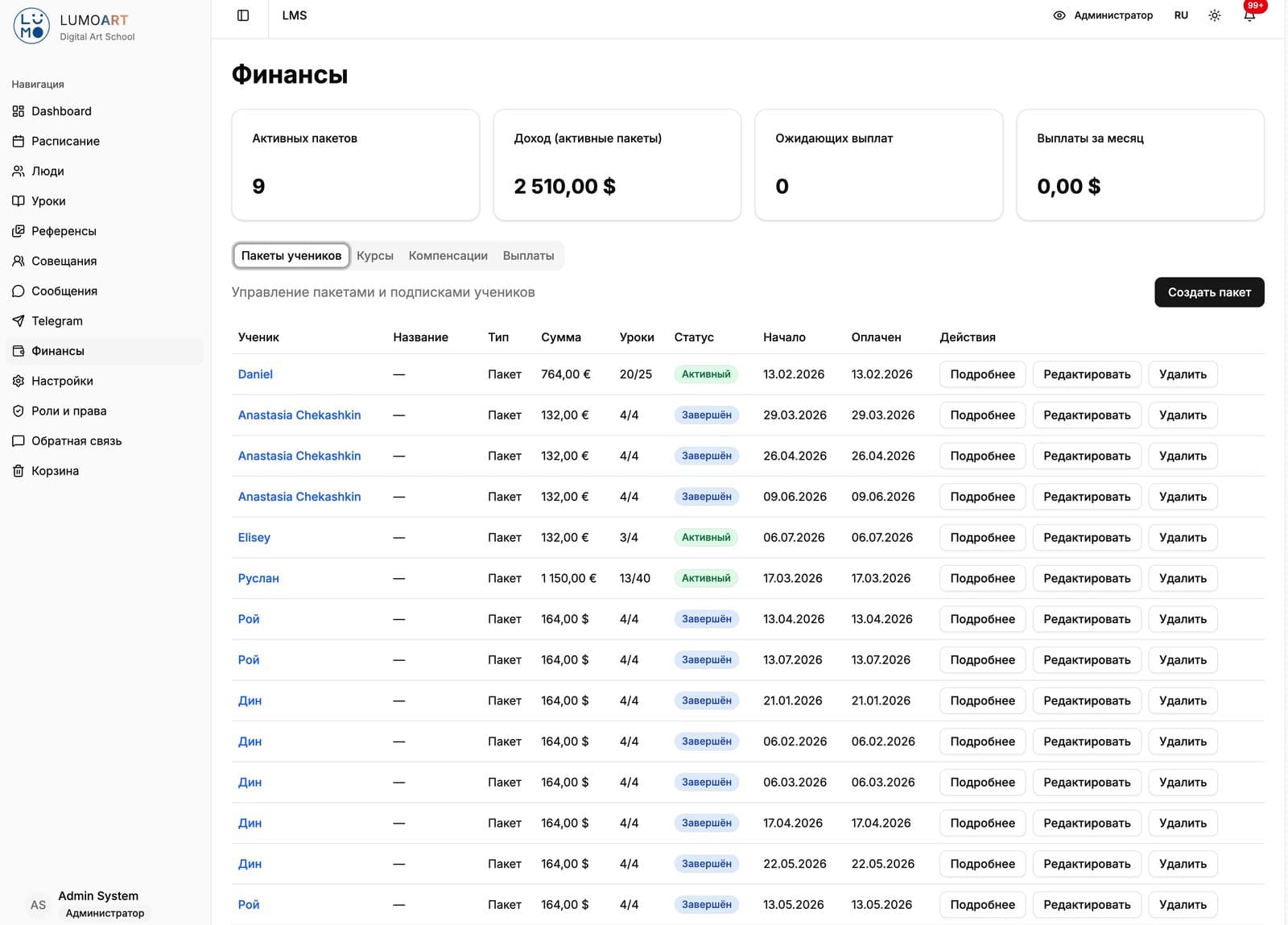
Since May 2024 the school has been running and bringing in an average of €2,500 a month — on just four sales waves in two years, because students stay for years: 40-lesson packages and monthly renewals for the same child run from January through September, and the very first student is still with the school. The third wave opened up Canada by accident — the course was bought by Israeli emigrants who had moved there. The fourth deliberately targeted the US and got a high conversion rate: 6 of 8 meetings turned into a purchase. Ads were stopped after that — the school had hit its capacity. Today's economics: a lead at €12, the full course at €1,350 split into five or ten payments, or €1,050 paid upfront. Katya and one other teacher run it, both fully booked.
The school's main regions today are North America and Israel, with a few students from Central Asia and the Balkans. Katya lives in Argentina and is planning to pursue a PhD in Buenos Aires — what emigration once took away, the school has given back. The next stage is already underway: scaling the school through hiring teachers and expanding marketing.
Frequently asked questions
More case studies
Real projects with real numbers — what worked, what did not, and why.