

AVIATOR Online School for Kids and Teens
The full story of building an online school with over $110,000 in revenue and packaging the project for investment

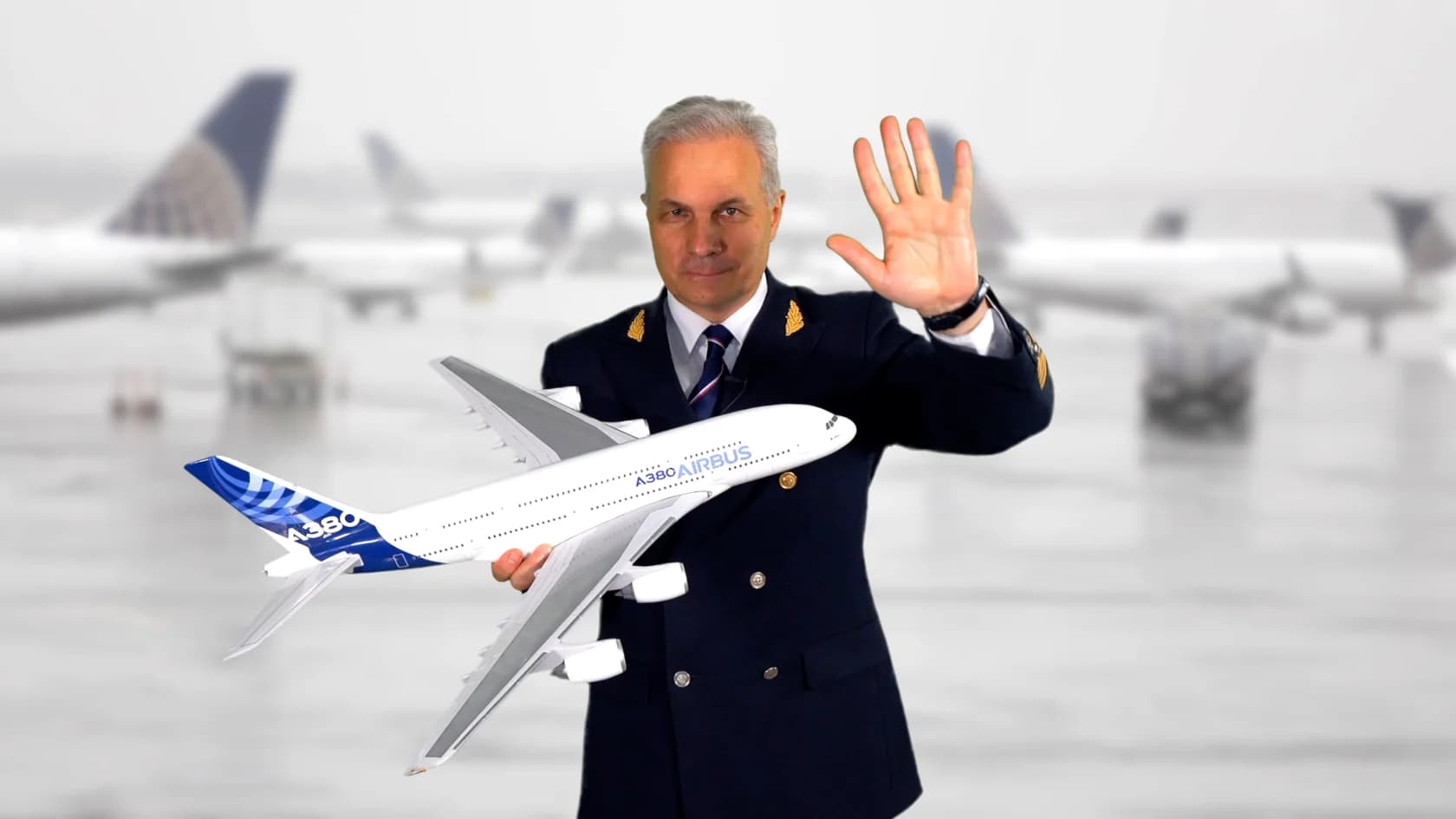
Alexander Martenyuk, military pilot, retired Air Force captain, founder of the Aviator online school, talks about the project's results
Project history
At the end of 2020, we were approached by an already-running project — a kids' and teens' aviation club. It was a network of clubs in Moscow running in-person classes. The founders now wanted to expand their audience and grow the number of students by launching online courses.
The idea behind the online school was quite ambitious: teaching kids to fly Boeing aircraft and preparing them for a future aviation career. The courses were meant to include both motivational elements and practical knowledge useful to young aviators. Some of the material had already been filmed in special locations with real aircraft cockpits. Live meetups and camps for students were also planned, which added to the project's uniqueness.
The sales presentation for the course has survived in full — flip through the "Young Pilot" presentation.
Our task was to build a full-fledged online school capable of selling courses automatically and generating steady revenue. We were also expected to help set up the business system so the project could run and grow successfully.
We worked on a partnership basis, so much of the project was built by our own team.
The project founders


Alexander and Evgeny Martenyuk, twin brothers, both military pilots. Alexander was in charge of the online school — a man with boundless optimism, very energetic and positive to work with.
Tasks and goals
- Package the online course
- Build a system to sell the course on cold traffic
- A steady inflow of students
- Build and manage the business process
How we did it
Ran customer development, identified segments, uncovered interests, and helped refine the product.
Ran a series of test webinars, and based on the results built one automated sales webinar
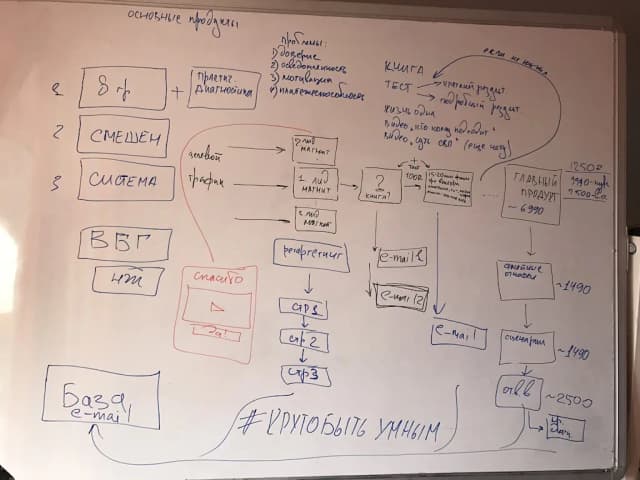
Built an automated webinar funnel
Drove targeted traffic from Facebook. Set up traffic from VK
Strengthened the funnel with a free lesson and other products
Brought in a sales department and set up the sales process
Developed a product for younger schoolchildren, built the program, and hired teachers
Ran summer camp sales and several promotional sales events to the warm base
Packaged the project for investment, put together a presentation and reports for negotiations.
Customer development
We ran the audience research at the same time as we were preparing the webinar, refining the results on the fly.
Our task was to uncover the audience's needs and understand the main motivation for parents who might enroll their child in aviation classes.
We formed several hypotheses and tested them in depth interviews. Then, based on the interview results, we picked out the overlapping themes and built a questionnaire.
We ran customer development on both cold and warm audiences. The warm audience came from Aviation Club customers. The cold audience we found through paid traffic.
Traffic tests and audience research together revealed our strongest hypothesis: parents and child have dreamed of a pilot career since childhood, and the child is planning to enroll in an aviation university.
This audience turned out to give us the most leads.

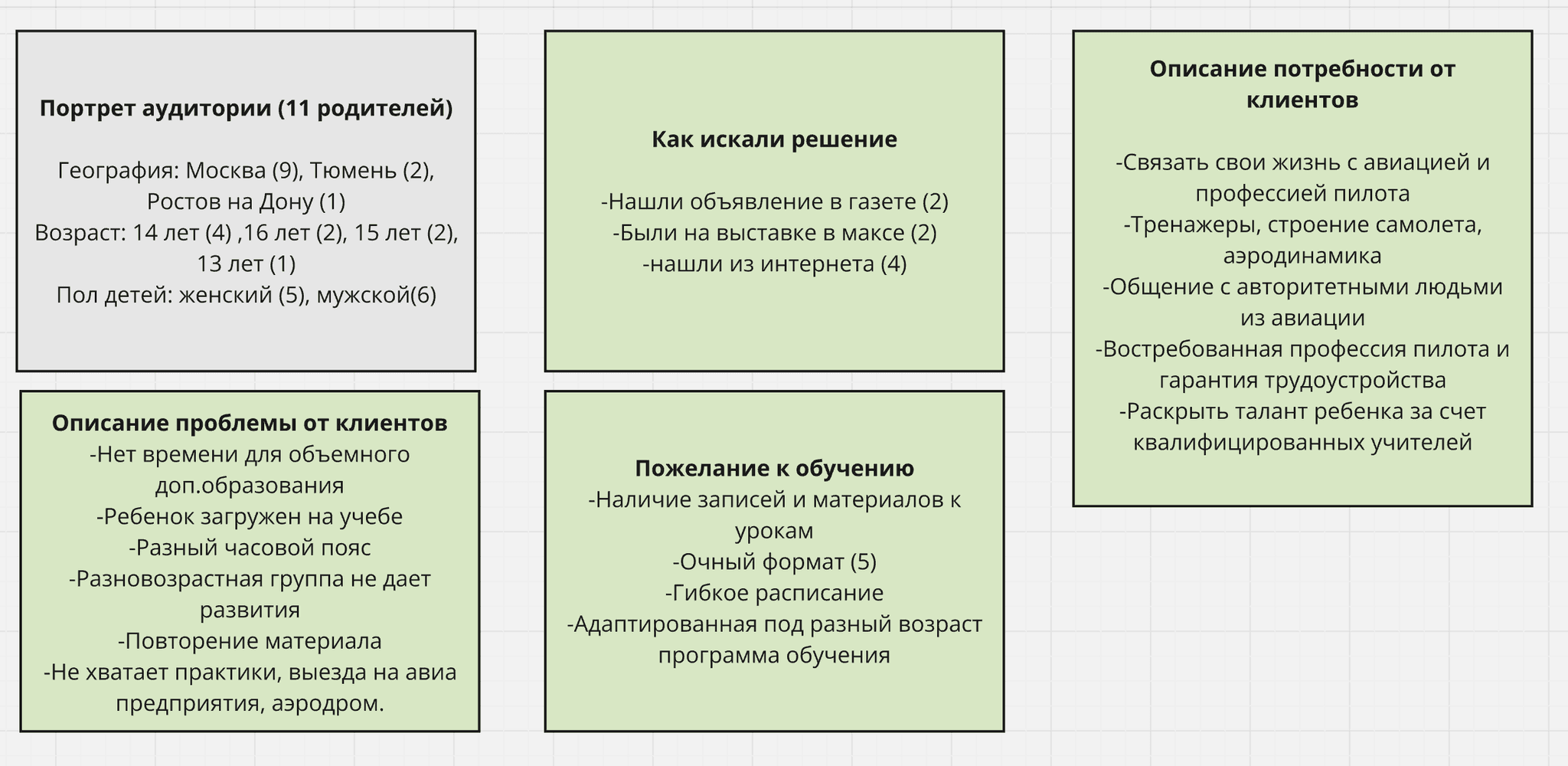
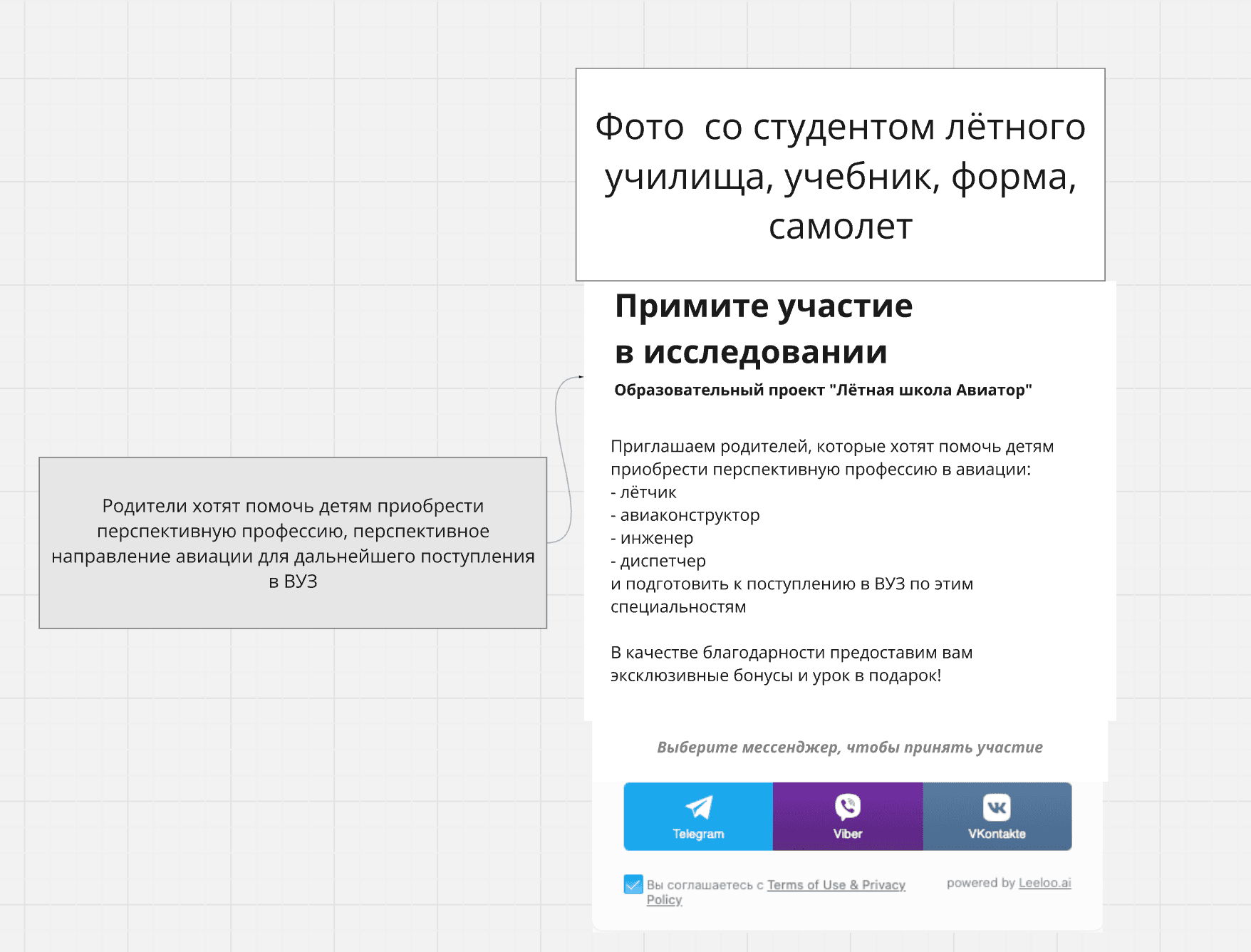
We identified segments, built hypotheses, and prepared an interview script
The sales webinar
We started by testing several hypotheses on cold traffic. What that means: we came up with hypotheses in the JTBD framework (what jobs the audience is willing to hire a product for), created experiments — ad creative plus a sign-up page — and launched traffic. The most successful hypothesis helped us choose the webinar topic.
Sales webinar for Aviator school
Webinar title — "How to prepare your child for a career in aviation."
We first ran a series of webinars to identify the moments that worked best for sales. Then we adjusted the script and recorded the final version.
This webinar ran on traffic unchanged for several months and kept generating sales.


Automated funnel and website
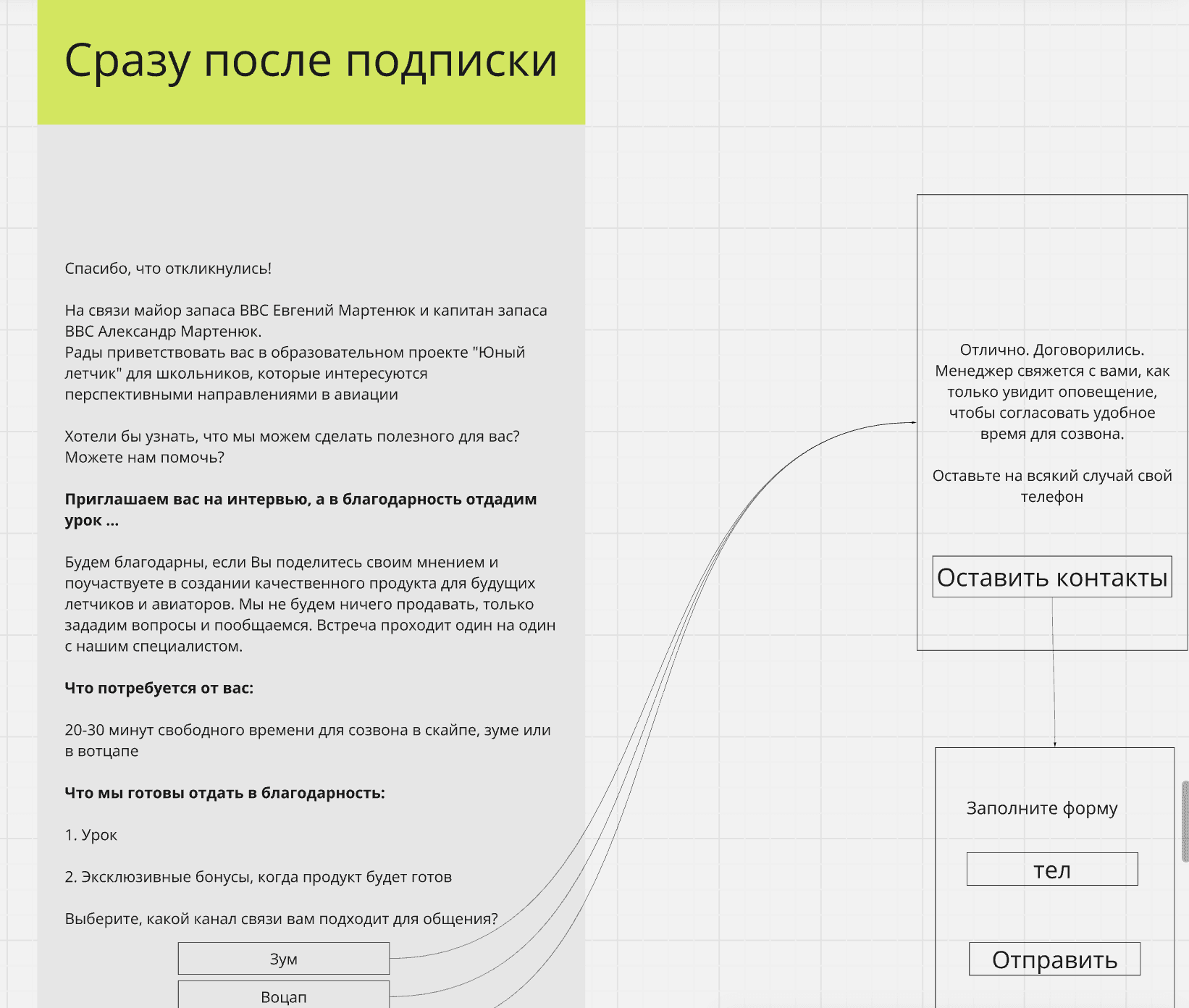
Overview of Aviator school's webinar funnel
We kept building and refining the funnel throughout the project.
The funnel led to a free webinar, then offered a replay and sales. We built a long warm-up sequence into the funnel.
We learned by experience that the audience typically takes several days to decide on a purchase, usually at a family meeting. We accounted for this in the funnel. We also added the ability to "try on" the product, to test it in action. In this form, the funnel ran fully automatically for the first three months, even without a sales department. When needed, the business owner Alexander spoke with parents himself and closed the sales.

Webinar show-up rate ran from 20 to 50%
Aviator school's automated funnels: a breakdown by example
Traffic
Setting up traffic for the automated funnel isn't a one-time action. Ad creatives burn out, and results are never stable. But with our approach to testing, we can always find new working hypotheses.
We used traffic from two social networks — Facebook and VK.
This niche performed better on VK, so over time we dropped Facebook.


| Metric | Value |
|---|---|
| Social networks | Facebook, VKontakte |
| Best channel | VKontakte |
| Cost per sign-up | $1.5–2.4 |
| Average cost per webinar attendee | ~$4.7 |
Free products
We added several lead magnets to strengthen the funnel.
One of them is the aviation quest — an online lesson with tasks that could be completed automatically. In the quest, participants had to complete flight-control tasks and fly a route from Moscow to Paris.
Later we added a few more lead magnets, including a free lesson, which was part automated tasks and part conducted live with the child. The lesson topic changed depending on the child's age.
These lessons were developed together with our curriculum specialist.
The free lesson became an additional entry point into the funnel and was later used by the sales department.


Sales department
After three to four months of the automated funnel running, it became clear we needed a sales department to raise conversion rates, increase capacity, and bring in more students.
We developed a sales script built around a free lesson for the child, a consultation for the parents, and a sales offer. The sales department was outsourced, but even so, developing the scripts, reporting forms, and product training was on us.
The sales department raised conversion rates, but also added costs. It took a couple of months to get the process working, and after that we were ready to scale traffic.
Expanding the product line
The flagship product, the "Young Pilot" online course, was aimed at children aged 12 to 17. But our students had younger siblings, and parents of younger children often asked us directly to take their child on the course.
We decided to create a new product for younger schoolchildren. It was a lighter, more entertaining program where kids learned about aviation, the laws of physics, and history through play. We brought in a curriculum specialist and other experts and created the "Young Pilot Junior" course.
All lessons on this course were held live, so we hired teachers, prepared a program for them, and built a quality-control system.


Sales to the base
Most of our traffic came from VK, and the group we were running there kept growing.
We also nurtured the base in chatbots, sending subscribers news broadcasts and invitations to free events — for example, online meetups with cosmonauts or joint screenings and discussions of aviation films. The school's founder Alexander is someone genuinely passionate about what he does — he enjoys running events, which made it easy for us to work with him, and the base grew well too.
Over the course of the project we ran three sales events. These are promotions during which we create sales-driving events, boost subscriber activity, and offer the company's products at special prices, timed to a season or holiday (New Year, a summer sale). The sales events generated extra revenue of from ~$4,000 to ~$8,000.
We also sold out a summer offline camp — the Flight Camp near Moscow. All spots sold.


Preparing for investment
The project had been running for over a year, the business had passed the pre-seed and seed stages, and had moved to hands-on management.
At the startup stage there's rarely much profit, and an ambitious project can run at breakeven for the first couple of years. The online school wasn't running at a loss, but it badly needed investment to grow. The product needed strengthening and development, and traffic needed to increase.
Alexander, the school's founder, was negotiating with potential investors. One of them was a major Russian airline, ready to invest in a school for teens under its own brand.
We helped prepare the project's investor packaging and helped build the presentation. There was already preliminary agreement to invest in the project. Final negotiations were set to take place in early March 2022.
But in late February everything changed, including the standing of Russian airlines.

How the project ended
In 2022, the world changed. Airlines in Russia ran into economic hardship because of the war. Without investment, the project could not continue to develop in the form it had been built.
The online school still exists, but has changed its focus and flagship product — it's still running today: aviatorschool.ru.
We stopped being partners and have not worked with the online school since 2022.
The funnel, four years later
The automated webinar funnel we built in 2021 is still running today — the best stress test a system can get.
Fresh numbers from summer 2026: in June the funnel brought in ~$1,120 in sales from ~$260 of traffic — the ad spend paid for itself more than fourfold. In July, when the budget was scaled up to ~$4,700, sales came to ~$7,100–8,300.
A sales system built once keeps paying back its traffic spend four years later — without rebuilds or relaunches.
The secret to the project's success is a quality product that people actually need, and a founder who is genuinely passionate about their project
Frequently asked questions

Want to discuss your project?
Something interesting might come out of it
George Ryzhenko
CEO, Digital Experts
More case studies
Real projects with real numbers — what worked, what did not, and why.