

Online School for a Blogger
Product launch for a personal-effectiveness school with a $8,500 result
How we did it
Researched the target audience, identified the problems, and came up with a product that would land.
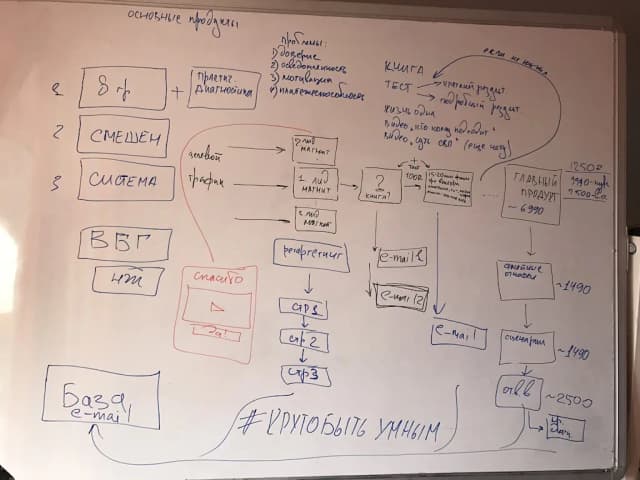
Came up with three different angles from different problems, made three lead magnets, a series of opt-in pages and long reads.
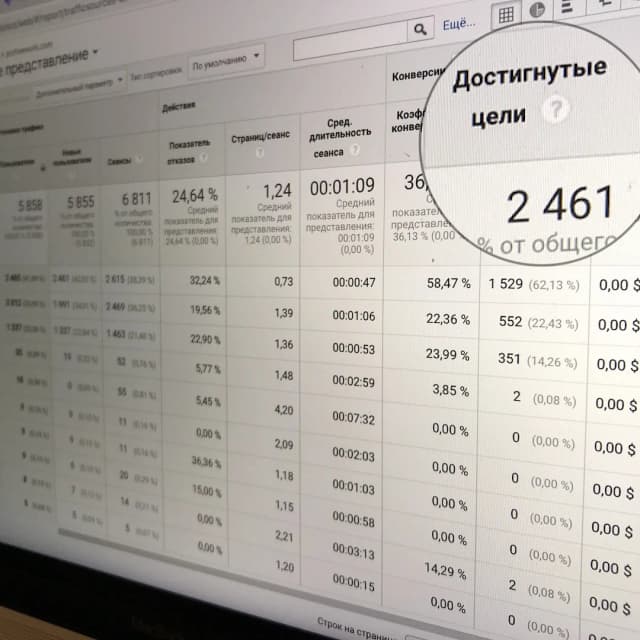
Drove targeted traffic from Facebook. Set up Yandex Direct and Google AdWords.
Built automated funnels across four main chatbots and email.
Gathered an audience for a webinar and ran sales. Repeated it a month later.
1. Strategy
We analyzed the past year's sales and found a problem — a steady decline in sales from launch to launch. Digging in, we realized Anna was offering her clients not quite the product they wanted to buy.
The product: time management and personal effectiveness. But Anya's clients were girls and women who wanted to be like Anya — live in LA, travel the world. So they bought whatever Anya offered, but never got the result. The result: falling sales.
We came up with a completely different product, built on emotion, giving energy. The product included a lot of body work. The goal — charge people with energy, give them a push toward change. That was exactly the target audience's demand. "Anya, tell me how you managed to become like this?"


2. Subscribing to the database
For the subscription flow we made three fundamentally different entry points:
- failures and setbacks
- money mindset
- positive change
For each angle we made a lead magnet and built its own warm-up funnel. Interestingly, on the first webinar launch the "failures" angle outperformed all others, while on the second it showed the worst conversion, and the "money" angle pulled ahead.
For each entry point we made a series of articles, opt-in pages (a separate page for each audience segment), and hooked up chatbots for subscriptions.
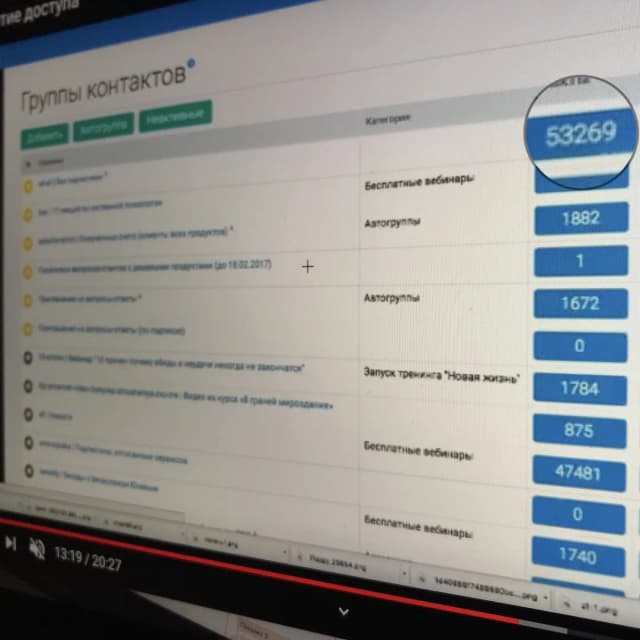
We work with chatbots, and that gives conversions on average 5–10 times higher than working with email alone. In total we signed up about 10,000 people to the database.


3. Traffic
Our main traffic source was Facebook. Targeted advertising on Instagram. Stories ads performed best. The simpler the ad, the higher the result. Average subscriber cost ~$0.30.
Search advertising on Yandex Direct and Google AdWords. Also a consistently good result, subscriber cost ~$0.41–0.48.
In total we spent ~$1,100 on traffic.


4. Funnels in bots
The selling magic hides in chatbots. We build engaging automated funnels that make the client interested and want to keep reading and going deeper. We use quizzes, game elements, video, photos, quests. That's the whole secret. And this for every segment of the target audience.
In total, three funnels, four bots (Telegram, Viber, VK, FB) and email — five channels, across three angles plus segmentation within. That worked out to around 30 branches. But it was worth it, since step-to-step conversion came to about 90%, and the final webinar attendance almost 30%.


5. Webinar
We ran two webinars a month apart. Around 2,000 people attended the webinars. Preparation took several weeks, working through the sales script and coming up with stories. The result: an average sales conversion from the webinar of 14%.


Result
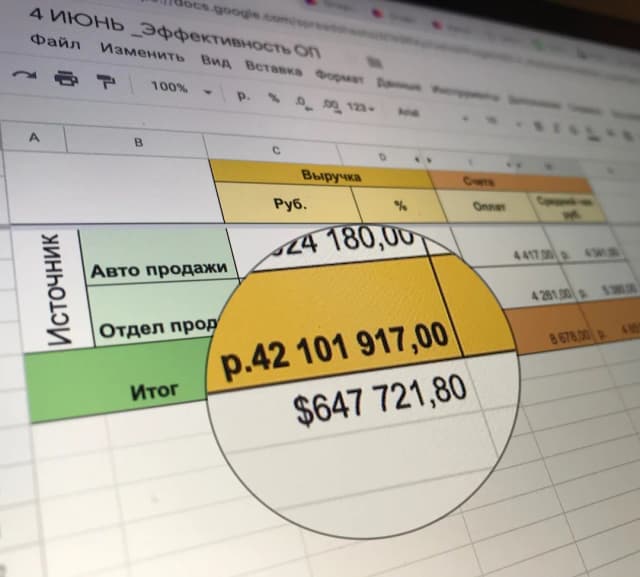
A product built for the audience's real demand sold to both the warm and cold database: $8,500 in sales from ~$1,100 of ad budget.
Frequently asked questions

Want to discuss your project?
Something interesting might come out of it
George Ryzhenko
CEO, Digital Experts
More case studies
Real projects with real numbers — what worked, what did not, and why.